
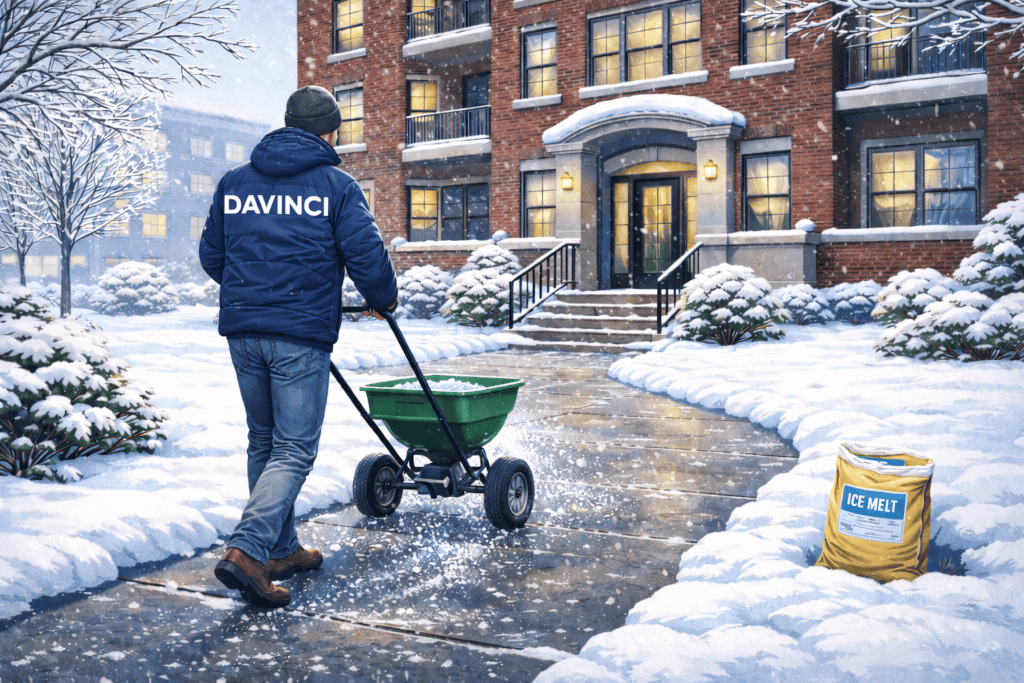
Halifax winters are hard on buildings — and even harder on rental properties that don’t get consistent oversight. Between salt erosion, freeze–thaw cycles, ice buildup, and slip-and-fall risk, winter is when small issues can quickly turn into expensive repairs or liability claims.
For Halifax landlords and investors, proactive winter property maintenance isn’t optional — it’s asset protection.
Why Winter Is the Highest-Risk Season for Halifax Rentals
Halifax’s coastal climate brings:
- Frequent freeze–thaw cycles
- Heavy use of road and sidewalk salt
- Wet snow that refreezes into ice
- Strong winds and drifting snow
These conditions accelerate material deterioration and increase tenant and visitor injury risk, especially on older properties or multi-unit buildings. Property maintenance isn’t optional — it’s liability protection.
Salt Erosion: The Silent Damage Most Owners Miss
Salt is effective for ice control — but brutal on buildings.
Common salt-related damage in Halifax properties includes:
- Concrete spalling on steps, walkways, and balconies
- Rusting railings and metal fasteners
- Accelerated wear on entry doors and thresholds
- Damage to brick mortar and stonework
Without routine inspections, salt erosion often goes unnoticed until major repairs are required in spring.
Best practice:
✔ Regular visual checks
✔ Prompt rinsing or cleanup during mild winter days
✔ Early repairs before moisture penetrates surfaces
Ice Buildup & Freeze–Thaw Damage
Ice doesn’t just create slip hazards — it actively damages structures.
High-risk areas include:
- Entry stairs and landings
- Downspouts and drainage exits
- Flat roof edges and valleys
- Basement walkouts and retaining walls
When melting snow refreezes, it expands inside cracks, slowly breaking concrete, asphalt, and masonry apart.
Preventative winter maintenance focuses on drainage control, snow removal timing, and early crack identification.
Slip & Fall Liability: A Major Winter Risk for Landlords
In Nova Scotia, property owners have a duty of care to keep common areas reasonably safe. Ice-related injuries can lead to:
- Insurance claims
- Legal disputes
- Increased premiums
- Reputational damage
Common slip-and-fall risk zones:
- Entryways and sidewalks
- Parking areas
- Exterior stairwells
- Shared walkways in multi-unit buildings
Documentation matters. Clear records of snow clearing, salting, inspections, and repairs are critical if a claim arises.
What Proper Winter Property Maintenance Looks Like in Halifax
Effective winter property maintenance care isn’t reactive — it’s system-driven.
A strong winter maintenance plan includes:
- Scheduled site inspections after storms
- Snow and ice monitoring (not just clearing)
- Salt usage oversight to limit surface damage
- Drainage checks to prevent ice buildup
- Clear documentation and photo reporting
This approach protects both the physical property and the owner’s liability exposure.
Why Professional Oversight Matters in Winter
Winter issues often occur between tenant reports — especially in vacant units, common areas, or exterior spaces tenants don’t monitor closely.
Professional property maintenance management ensures:
- Problems are identified early
- Maintenance is coordinated quickly
- Records are properly maintained
- Owners aren’t relying on chance or complaints
For out-of-province owners, snowbirds, and busy investors, winter oversight is often the difference between a smooth season and costly surprises in spring.
Final Thoughts: Winter Property Maintenance Is Asset Protection
Halifax winters are predictable — but property damage and liability don’t have to be.
Salt erosion, ice buildup, and slip hazards are manageable with consistent inspections, preventative maintenance, and clear documentation. The goal isn’t just getting through winter — it’s preserving property value and reducing long-term risk.
Call to Action
Own a rental or vacant property in Halifax?
Book a free winter property review and make sure your building is protected before small issues turn into big repairs.
DaVinci Property Management